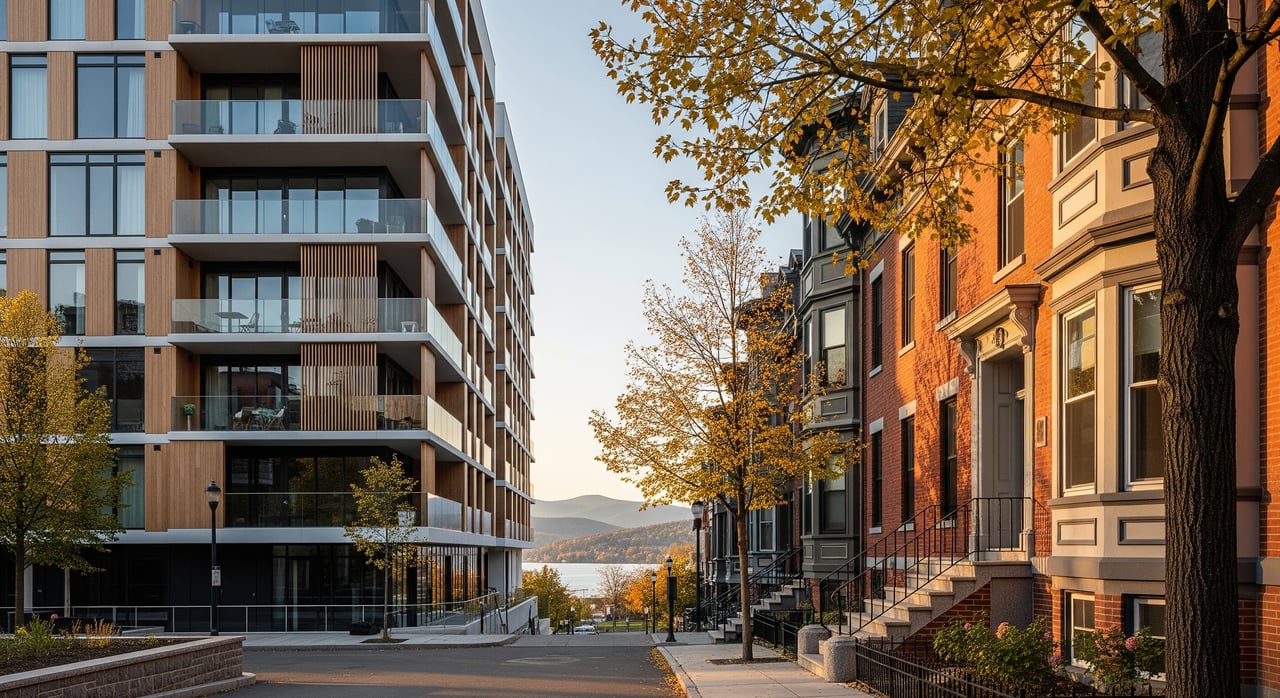
Trying to choose between a condo and a townhouse in Burlington can feel confusing. The terms often get used interchangeably, and each option affects your budget, maintenance, and lifestyle. If you are focused on downtown or the Old North End, the details matter even more. In this guide, you will learn the real differences in ownership, HOA responsibilities, costs, financing, and resale so you can decide with confidence. Let’s dive in.
Condo vs. townhouse in Burlington: what they mean
A condominium is a form of ownership. You own your individual unit plus a shared interest in common elements such as the roof, exterior walls, hallways, land, parking, and amenities. Condos are created and governed by recorded documents like a declaration, bylaws, and rules that outline what the association maintains and what you maintain.
A townhouse is a building style, not a single legal structure. It is typically a narrow, multi‑story home attached side‑by‑side with its own entrance and sometimes a small yard. In Burlington, a townhouse can be legally structured as a condo or as fee simple with an HOA that manages shared areas. You need to verify which model you are buying.
The practical takeaway: ask whether the property is legally a condominium or a fee‑simple townhouse. That one answer drives how the property is governed, how assessments work, and what you are responsible for maintaining.
Who maintains what
In a typical Burlington condo
- You are usually responsible for interior finishes and systems inside the unit, such as appliances, flooring, and interior walls, unless the declaration says otherwise.
- The association is typically responsible for common elements like exterior walls, the roof, landscaping, driveways, building structure, and shared systems such as central heating or elevators.
- Always confirm responsibilities in the declaration and rules because each building can be different.
In a fee‑simple townhouse with an HOA
- You usually maintain the structure and the lot, including exterior work, unless the covenants shift some tasks to the HOA.
- Many HOAs handle shared amenities and may cover items like snow removal, lawn care, or exterior painting on a schedule.
- Review the maintenance matrix in the HOA documents to see exactly who handles what.
HOA scope to review carefully
- Monthly or quarterly dues: what they cover, such as heat, water and sewer, trash, master insurance, reserves, snow removal, landscaping, and management.
- Reserve fund and history of special assessments.
- Rules and restrictions: rental limits, short‑term rentals, pet rules, and policies on exterior changes.
- Insurance details: what the master policy covers and what your HO‑6 or homeowners policy must cover.
Vermont climate and older buildings
Burlington weather makes maintenance planning essential. Snow removal and roof snow loads are significant. Confirm who clears walkways and driveways, who handles roof maintenance, and how winter costs are budgeted.
Older buildings in downtown and the Old North End sometimes include lead paint, knob‑and‑tube wiring, or aging mechanicals. Clarify whether the association or individual owners are responsible for upgrades and how those projects are funded.
Exterior woodwork, porches, and foundations often need periodic attention in this climate. In many condominium communities, the HOA manages these common‑area tasks. In townhouse settings, you may handle more of them directly unless the HOA assumes certain items.
Cost and financing factors
HOA fees and budgeting
HOA dues vary widely. Smaller‑building condos and fee‑simple townhouses that provide limited services often have lower dues. Larger downtown condo buildings with elevators or central utilities usually carry higher dues that bundle more services. Review the current budget, balance sheet, reserve study, and recent meeting minutes to evaluate future costs and the risk of special assessments.
Property taxes and assessments
Burlington’s municipal tax rate applies regardless of condo or townhouse status. Assessed values differ by property type and size. In some condominium projects, taxes are apportioned by each unit’s ownership interest. Check tax bill breakdowns to understand how assessments are calculated for the property you are considering.
Insurance differences
Condo owners typically carry an HO‑6 policy that covers interior improvements, personal property, and liability. The association’s master policy insures common elements, but coverage limits and deductibles can vary. Fee‑simple townhouse owners usually carry a full homeowners policy that covers the structure and the land. Review master policy summaries and confirm your responsibilities.
Financing and lender requirements
Lender underwriting can be stricter for condos. Many programs evaluate the entire condo project, including owner occupancy ratios and delinquency rates. FHA, VA, and Fannie Mae all have condo project approval processes that can affect options and timing. Fee‑simple townhouses often face fewer project‑level hurdles, although individual lender overlays still apply. Check with your lender early to avoid surprises.
Resale and neighborhood fit
What buyers often seek downtown
Many downtown buyers value walkability, proximity to Church Street Marketplace, nearby restaurants, and quick access to Lake Champlain. Condos are common in this area and tend to offer low exterior maintenance and amenity access that fits an urban lifestyle.
Old North End and 05408 context
In the Old North End, buyers often focus on affordability and the character of older housing stock. The area includes a mix of multi‑family buildings, older single‑family homes, and smaller condo or townhouse conversions. Parking norms can differ from downtown, which may influence convenience and resale.
Resale drivers: condos vs. townhouses
- Condos: Pros include low exterior maintenance, potential amenities, and downtown convenience. Cons can include monthly fees and association restrictions that narrow the buyer pool. Some condo projects carry financing requirements that further limit options.
- Townhouses: Pros include a more single‑family feel with private entrances and possible yard or garage, and fewer project‑level financing hurdles if fee‑simple. Cons include more exterior maintenance, which can deter buyers who prefer a turnkey lifestyle.
Burlington specifics that impact marketability
- Rental demand: Proximity to UVM, Champlain College, and downtown supports both short‑ and long‑term rental demand. HOA rules on rentals and short‑term rentals can shape investor interest and resale.
- Parking: Downtown and parts of the Old North End have constrained street parking. Townhouses with dedicated off‑street parking or garages often have an advantage.
- Historic fabric and renovations: Older structures in the Old North End can carry considerations like lead paint and potential guidelines for exterior changes.
- Seasonal factors: Lake‑area weather and tourism can influence short‑term rental demand and seasonal maintenance planning.
Due diligence checklist for buyers
Key documents to request
- For condos: declaration or master deed, bylaws, rules, meeting minutes from the last 12 months, current budget, reserve study, financials or audits, list of any assessments, owner delinquency report, and a summary of the master insurance policy. If required for financing, obtain the condo project questionnaire.
- For fee‑simple townhouses with an HOA: covenants or CC&Rs, HOA budget and minutes, maintenance responsibility chart, and records of special assessments.
- For both: seller property disclosures, recent utility bills, tax bill, warranties, and any inspection reports.
Inspection and technical checks
- Complete a general home inspection. Add focus on the building envelope and roof condition. In a condo, the roof is usually a common element; in a fee‑simple townhouse, you may be responsible for it.
- Evaluate HVAC, plumbing, and electrical systems. In older Burlington homes, confirm code compliance and look for outdated wiring.
- Look for signs of water infiltration, basement moisture, and foundation issues. Order a pest inspection if indicated.
- For condo units, walk the common areas and, if accessible, observe roofs and mechanical rooms to gauge overall building health.
Questions for the HOA or manager
- What services are included in the dues, and are any utilities bundled?
- Are there planned special assessments or major capital projects, such as roof replacement or exterior painting?
- What are the current owner‑occupancy and rental percentages?
- Are there any active or pending legal matters involving the association?
- What is the policy on short‑term rentals, subletting, and interior or exterior renovations?
How to choose based on your lifestyle
If you want central access to restaurants, events, and the waterfront, a condo downtown may fit your lifestyle. You will likely trade higher dues and more rules for lower exterior maintenance and a simpler day‑to‑day routine. Review project health and rental policies early if financing is a concern.
If you want more of a home‑like feel with a private entrance, a small yard, or a garage, a townhouse can be a great fit. In a fee‑simple setup, your dues may be lower, but you should budget for exterior work over time. Confirm who handles snow removal and long‑term items like roofing.
For the Old North End and 05408, focus on how the property’s age and parking options intersect with your plans. A smaller condo or townhouse conversion can be a smart entry point. Just be sure you understand responsibilities for older building upgrades and any restrictions that could influence resale.
The bottom line: match the legal form of ownership, maintenance responsibilities, and HOA rules to your budget and daily routine. When the details line up, you will feel more confident in your Burlington choice.
Ready to compare specific buildings and townhome communities? Connect with the local team at Real Estate Associates for a walkthrough of HOA documents, financing options, and neighborhood tradeoffs.
FAQs
What is the main difference between a condo and a townhouse in Burlington?
- A condo is an ownership form with shared common elements and an association, while a townhouse is a building style that can be either a condo or fee‑simple with an HOA.
How do HOA dues differ between condos and townhouses?
- Condos often bundle more services into dues, while fee‑simple townhouses may have lower dues but higher out‑of‑pocket exterior costs; review budgets and reserve studies.
Are condos harder to finance than townhouses in Burlington?
- Sometimes; condo projects may face stricter lender requirements and project approvals, while fee‑simple townhouses often have fewer project‑level hurdles.
What should I check about insurance for each option?
- Condo owners typically need an HO‑6 policy plus the association’s master policy, while fee‑simple townhouse owners usually need a full homeowners policy that covers the structure and land.
What Burlington factors affect resale for condos and townhouses?
- Rental rules near UVM and downtown, parking availability, building age, and seasonal maintenance needs can all influence marketability and buyer demand.
What documents should I request before removing contingencies?
- For condos: declaration, bylaws, rules, minutes, budgets, reserve study, financials, assessments list, and master insurance summary; for townhouses: covenants, budgets, minutes, and maintenance charts.
How does parking compare in 05408 or the Old North End versus downtown?
- Downtown often has less free parking and more reliance on paid lots or permits, while the Old North End may offer more street parking, subject to local rules.