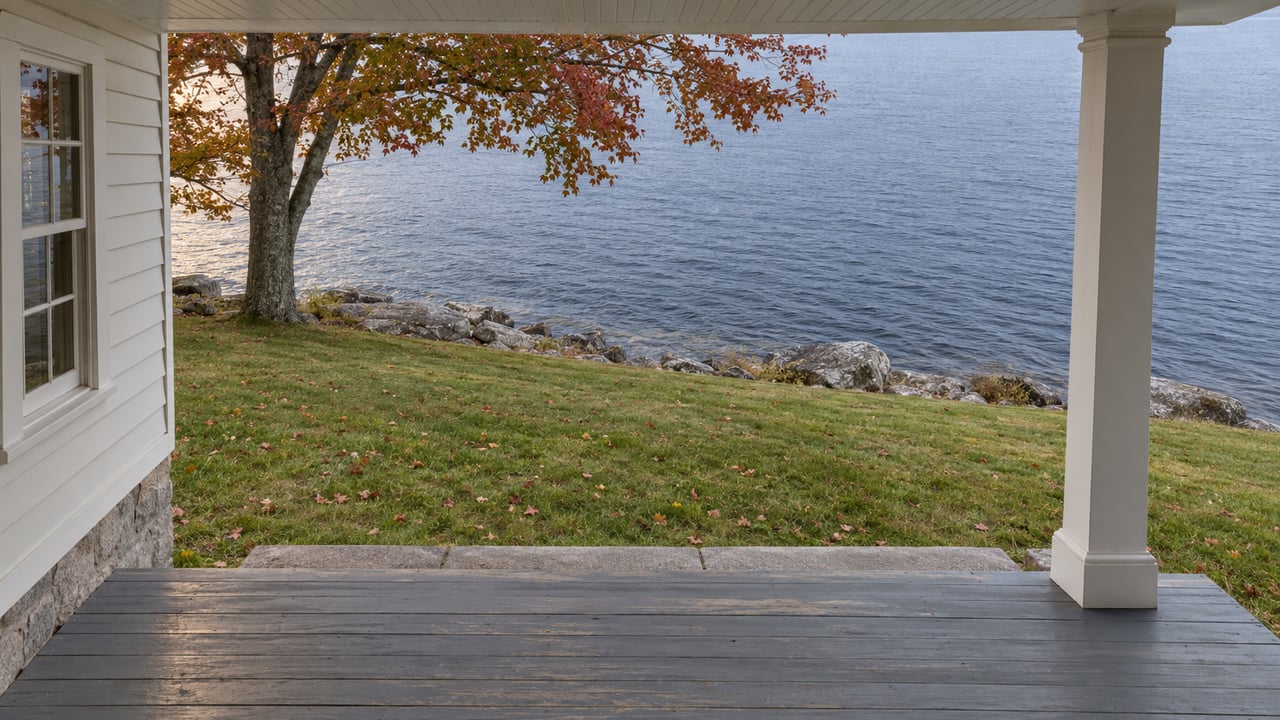
Walk to the bottom of College Street and you will still find the old ferry slip at 1 King Street Dock, the marina office, the parking lot that used to fill with cars waiting for the boat to Port Kent, New York. What you will not find is the boat. The hour-long crossing that used to carry passengers across the widest stretch of Lake Champlain to the Adirondack side stopped running in 2019, and it has not come back since.
People still ask about it. Anyone who has lived near the waterfront long enough has fielded the question from a visiting cousin or an old college roommate: can we still take that ferry over to New York, the one with the snack bar and the sightseeing deck? The honest answer is no. Lake Champlain Transportation, the company that runs the crossing, told local reporters the closure came down to declining ridership and pandemic-era staffing pressure, and by 2022 the company had gone further, dismantling both double-deck vessels that used to make that run. There was no quiet reopening waiting in the wings. The route is gone, and the company has said as much in public statements more than once.
None of that means the lake went quiet. It means the actual rhythm of the waterfront right now has nothing to do with a ferry that stopped running before some current residents even moved here.
What still moves people across the water
Two crossings still operate, and they serve different purposes than the old Port Kent run ever did.
The Grand Isle to Plattsburgh crossing is the workhorse. It runs 24 hours a day, year round, and takes about 14 minutes to cover the two miles between shores. This is the route that keeps running through the winter specifically because it has to. Lake Champlain freezes in the shallower northern reach, and the ferries on this crossing are built with reinforced hulls to break through thin ice and keep a channel open all season, making scheduled runs through the night rather than the occasional pass they used to make.
The Charlotte to Essex crossing is the other survivor, a shorter run of roughly 20 to 25 minutes that also runs year round, though not around the clock, and can pause during heavy icing. It has operated as a year-round route since 1998.
Neither of these is the leisurely, mountain-view sightseeing trip the Port Kent run offered. They are commuter routes, built for people who need to get from one side of the lake to the other, not for an afternoon spent on the water. Lake Champlain Transportation Company has run ferries across this lake since 1826, and the company estimates close to a million passenger crossings happen every year, almost all of them now split between these two working routes.
| Crossing | Season | Hours | Crossing time |
|---|---|---|---|
| Grand Isle, VT to Plattsburgh, NY | Year round | 24 hours a day | About 14 minutes |
| Charlotte, VT to Essex, NY | Year round | Daytime, reduced in ice | About 20-25 minutes |
| Burlington to Port Kent, NY | Discontinued since 2019 | Not operating | Was about 1 hour |
The Burlington waterfront itself is still very much a working part of the lake, just not through that old crossing. Rob Peterson, the city's Marina Manager and Deputy Harbor Master, oversees more than 180 dock slips and 75 moorings between the Burlington Boathouse Marina and Perkins Pier, a fully public marina system he has described as one of the few in the country with completely accessible docks. That is the infrastructure actually moving people onto the water this time of year, whether they are docking a sailboat or just walking down to look at the sunset.
What actually closed out the season
If you wanted a marker for when summer really ended on this stretch of the lake, it was not the ferry. It was the weekend of September 18 through 20, when Grand Point North and Oktoberfest Vermont landed on the same three days.
Grand Point North is Grace Potter's festival, staged at Waterfront Park with the lake as its backdrop since she founded it on her home turf. This year's lineup ran two stages without overlapping sets, so nobody had to choose between acts happening at the same time. Friday brought Grace Potter, Portugal. The Man, and The Devil Makes Three. Saturday added Dawes, Trampled by Turtles, and Maggie Rose. Sunday closed with Dark Star Orchestra and Dogs In A Pile. A few blocks away, Oktoberfest Vermont turned into a lakeside beer garden running the same three days, and the South End Art Hop had wrapped its run through the South End's galleries and studios the weekend before, meaning that stretch of the calendar effectively covered three of Burlington's biggest annual draws back to back.
That weekend functioned as the hinge between the festival calendar and whatever comes next. It also sat just a couple of weeks behind the Champlain Valley Fair, which ran its ten days at the Champlain Valley Exposition in Essex Junction from August 28 through September 6. Between the fair and the Grand Point North weekend, most of the region's marquee outdoor events for the year had already happened by the time September hit its second half.
What is still running now, in the weeks after that weekend, are the smaller, weather-dependent fixtures that don't get festival billing. Splash at the Boathouse, the dockside restaurant at the bottom of College Street, operates on a seasonal clock that typically runs from May into October, open daily from 11 a.m. until sunset, and closes down for the year once the weather stops cooperating. A short walk up the shoreline, Deep City, Foam Brewers' brunch spot at Waterfront Park, keeps serving weekend mornings with a tap list built around Foam's own beers alongside guest pours. These are the places actually filling the gap the festivals left, at least for as long as the season allows.
When the color actually shows up
The other piece of the fall calendar that matters here is timing, and it is easy to get wrong if you are working from a generic foliage guide instead of one built around specific lake destinations. Lake.com's 2026 fall foliage map, which tracked expected peak color at 100 lake destinations across the US and Canada, flagged Saturday, October 10 as the single busiest weekend of the season, with Lake Champlain named specifically alongside Lake Winnipesaukee, Lake George, and a handful of other major lake regions all expected to hit peak color that same week.
That gives a useful anchor for anyone planning a bike path ride or a walk along the shoreline around the change of the season. The window is not a single day. The broader study found that peak color at an individual destination tends to hold for around 12 days, which means the stretch bracketing October 10 offers more flexibility than a single Saturday would suggest, though the exact dates always depend on wind, rain, and how early or late the frost arrives that year.
Between now and then, the waterfront is in the quiet stretch: past the festival crowds, past the fair, with the dockside restaurants still on their fading summer hours and the ferries running their same working routes they run every day of the year. The Port Kent boat isn't part of that picture, and hasn't been for a while. Everything else along this shoreline kept its schedule anyway.
If you're spending time near this stretch of the lake and want to talk through what living here actually looks like month to month, from the marina to the bike path to the water itself, Pursuit Real Estate is happy to walk through it with you.